
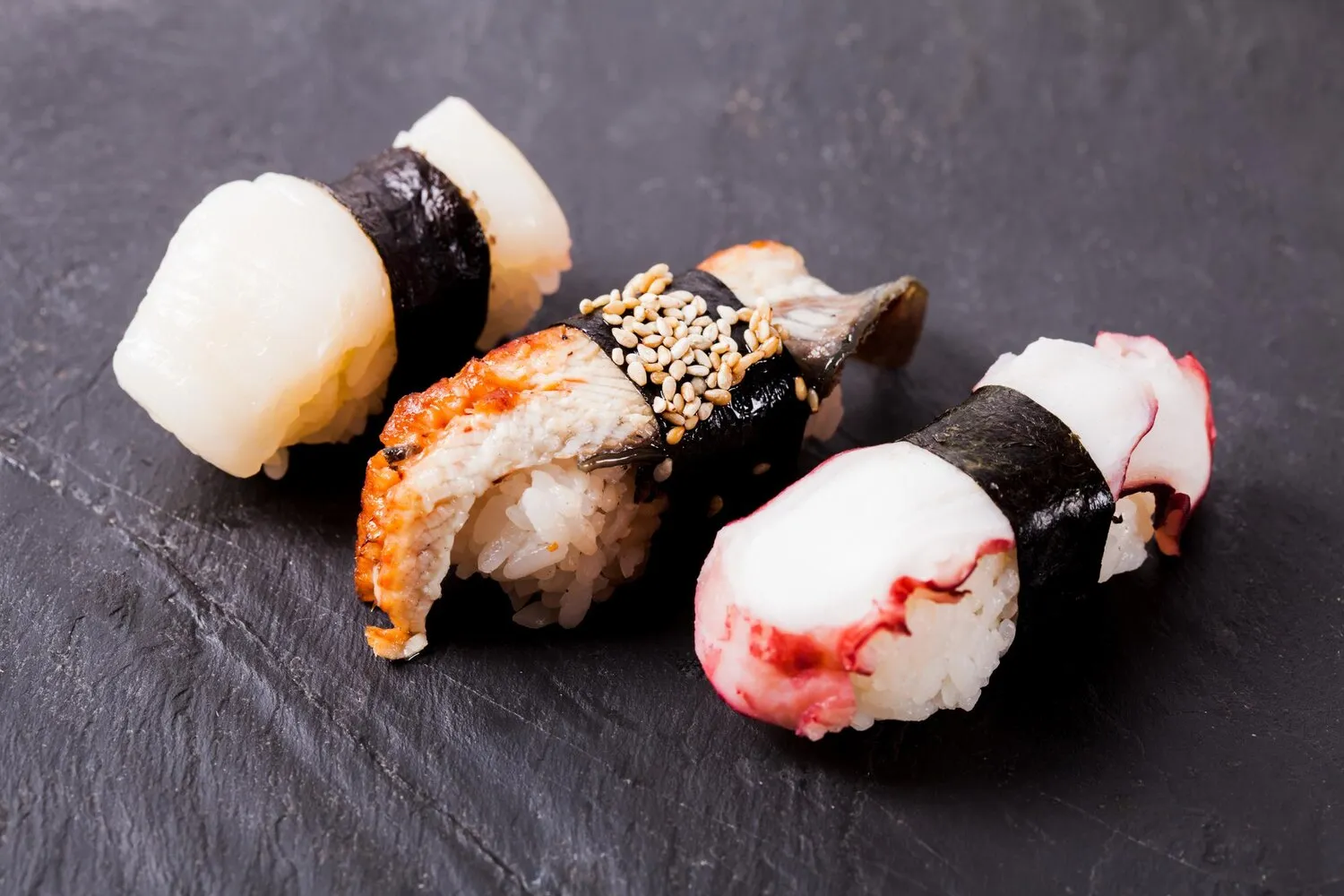

Nigiri
Slices of raw fish served over vinegared rice.
Información Nutricional
* El % de Valor Diario (VD) indica cuánto aporta un nutriente en una porción de alimento a una dieta diaria. Se utilizan 2,000 calorías al día para consejos generales de nutrición.
Función Premium
Función Premium
Nigiri sushi evolved from an earlier method of preserving fish in fermented rice. This process, known as 'narezushi,' was initially used to prolong the shelf life of fish. Over time, the fermentation process was shortened, and the rice began to be consumed alongside the fish. By the Edo period, nigiri as we know it today began to appear, with chefs like Hanaya Yohei credited with popularizing it as a quick and convenient street food in Tokyo (then called Edo).
Función Premium
Nigiri is more than just a food in Japanese culture; it's an art form and a culinary tradition that reflects precision, respect for ingredients, and attention to detail. The preparation and presentation of nigiri are highly valued, showcasing the chef's skill and dedication.
Sushi Etiquette
There are specific etiquettes around eating sushi. It's generally preferred to eat nigiri in one bite if possible. When dipping in soy sauce, dip the fish side down to avoid the rice absorbing too much soy sauce. Using chopsticks or fingers is acceptable, depending on the setting and personal preference.
Omakase Experience
Omakase, meaning 'I'll leave it to you,' is a dining experience where the chef selects and serves the dishes. This allows the chef to showcase their expertise and use the freshest, seasonal ingredients. It's a highly regarded and often expensive way to experience nigiri and other types of sushi.
Seasonal Ingredients
Japanese cuisine places a strong emphasis on seasonality. The type of fish used for nigiri varies depending on the time of year, ensuring the best quality and flavor. Chefs carefully select the ingredients to highlight the natural flavors of the season.
Función Premium
Nigiri offers a balance of fresh, clean, and subtly sweet flavors. The primary flavor components are the oceanic taste of the raw fish and the slightly acidic and sweet taste of the vinegared rice.
The raw fish, often tuna, salmon, yellowtail, or eel, provides a variety of textures and subtle nuances in flavor depending on the type. The sushi rice, seasoned with rice vinegar, sugar, and salt, provides a contrasting yet complementary base. A small amount of wasabi is often placed between the fish and the rice, adding a sharp, pungent kick that cleanses the palate and enhances the overall taste. Soy sauce is used sparingly to accentuate the fish's flavor, but it should not overwhelm it.
Función Premium
Freshness is Key
Always choose nigiri from reputable establishments that prioritize freshness. The fish should appear vibrant and glossy, with no off-putting odors. Freshness directly impacts the taste and safety of the dish.
Soy Sauce Usage
Use soy sauce sparingly. The goal is to enhance, not mask, the flavor of the fish. Over-dipping can make the nigiri too salty and ruin the balance of flavors.
Rice Temperature
The rice should be at room temperature, not too hot or too cold. This allows the flavors to meld properly and prevents the rice from becoming too sticky or hard.
Eat Soon After Serving
Nigiri is best enjoyed shortly after it's prepared. This ensures the rice remains properly textured and the fish is at its peak freshness. Avoid letting it sit for extended periods.
Función Premium
Explora platos y restaurantes adicionales de Nigiri
Explorar NigiriDescubre los mejores lugares para comer y experiencias culinarias en Innsbruck.
Explorar InnsbruckAprende más sobre la cultura gastronómica, la escena de restaurantes y el patrimonio culinario de Austria.
Explorar Austria