
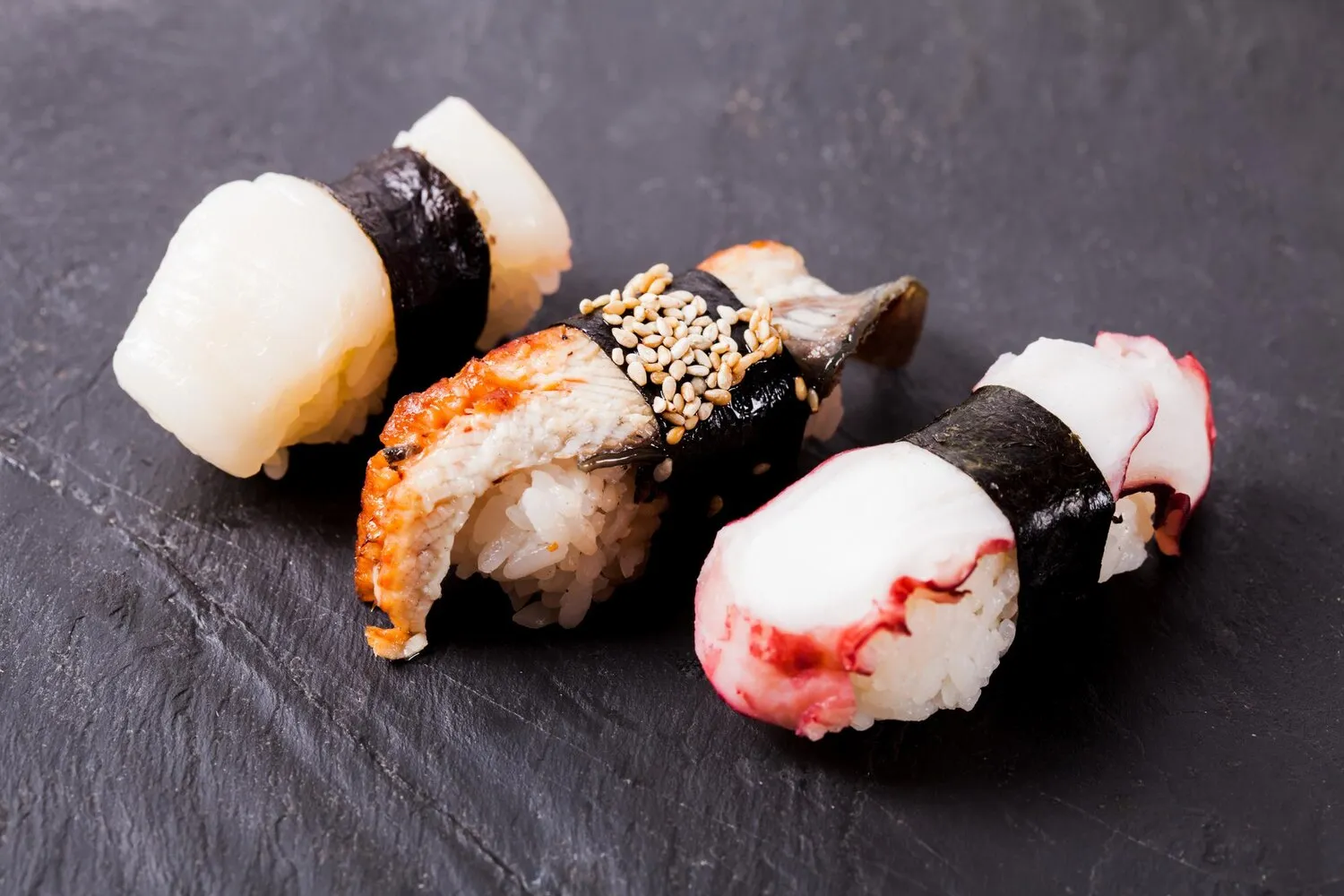

Nigiri
Slices of fish over sushi rice.
Información Nutricional
* El % de Valor Diario (VD) indica cuánto aporta un nutriente en una porción de alimento a una dieta diaria. Se utilizan 2,000 calorías al día para consejos generales de nutrición.
Función Premium
Función Premium
Nigiri's roots can be traced back to ancient methods of preserving fish in fermented rice. Over time, this preservation technique evolved into a more palatable and refined dish during the Edo period in Japan, with Hanaya Yohei credited with popularizing the modern form of nigiri sushi in the early 19th century by serving raw fish atop vinegared rice without the fermentation process.
Función Premium
Nigiri is deeply ingrained in Japanese culinary culture, representing simplicity, freshness, and the chef's skill. It's often enjoyed as part of a larger sushi meal or as a standalone delicacy, and its preparation is considered an art form.
Presentation Matters
The appearance of nigiri is crucial. Chefs carefully arrange the fish on the rice to showcase its color and texture, demonstrating their attention to detail and respect for the ingredients.
Omakase Experience
Ordering 'omakase' means entrusting the chef to select the best and freshest nigiri available, providing a personalized and often surprising culinary journey.
Sushi Etiquette
There are specific ways to eat nigiri, such as dipping only the fish (not the rice) in soy sauce and eating it in one or two bites to fully appreciate the flavors.
Función Premium
Nigiri offers a balance of delicate, fresh flavors with a subtle savory and acidic base. The fish provides the primary flavor, ranging from the buttery richness of tuna to the clean taste of snapper, complemented by the vinegared rice and often a touch of wasabi.
The primary flavor is derived from the type of fish used, which can vary widely. Tuna (maguro) offers a rich, almost meaty flavor, while salmon (sake) provides a fattier, milder taste. White fish like sea bream (tai) are known for their clean, delicate flavors. The rice, seasoned with vinegar, sugar, and salt, adds a subtly sweet and sour element that balances the fish. Wasabi provides a pungent kick, while soy sauce adds umami and saltiness, enhancing the overall taste.
Función Premium
Freshness is Key
Always choose nigiri made with the freshest possible fish. The fish should look vibrant and have a firm, glossy texture.
Rice Temperature
The rice should be at room temperature and slightly loose, not compacted or cold, allowing the flavors to meld with the fish.
Proper Dipping
Dip only the fish side into soy sauce to avoid oversaturating the rice and overpowering the delicate flavors.
Función Premium
Explora platos y restaurantes adicionales de Nigiri
Explorar NigiriDescubre los mejores lugares para comer y experiencias culinarias en Graz.
Explorar GrazAprende más sobre la cultura gastronómica, la escena de restaurantes y el patrimonio culinario de Austria.
Explorar Austria